

Why San Antonio Lights Luminarias at Christmas |
The quiet glow of a paper lantern connects San Antonio's River Walk celebrations to older Southwestern Christmas customs, Las Posadas and generations of family tradition. |
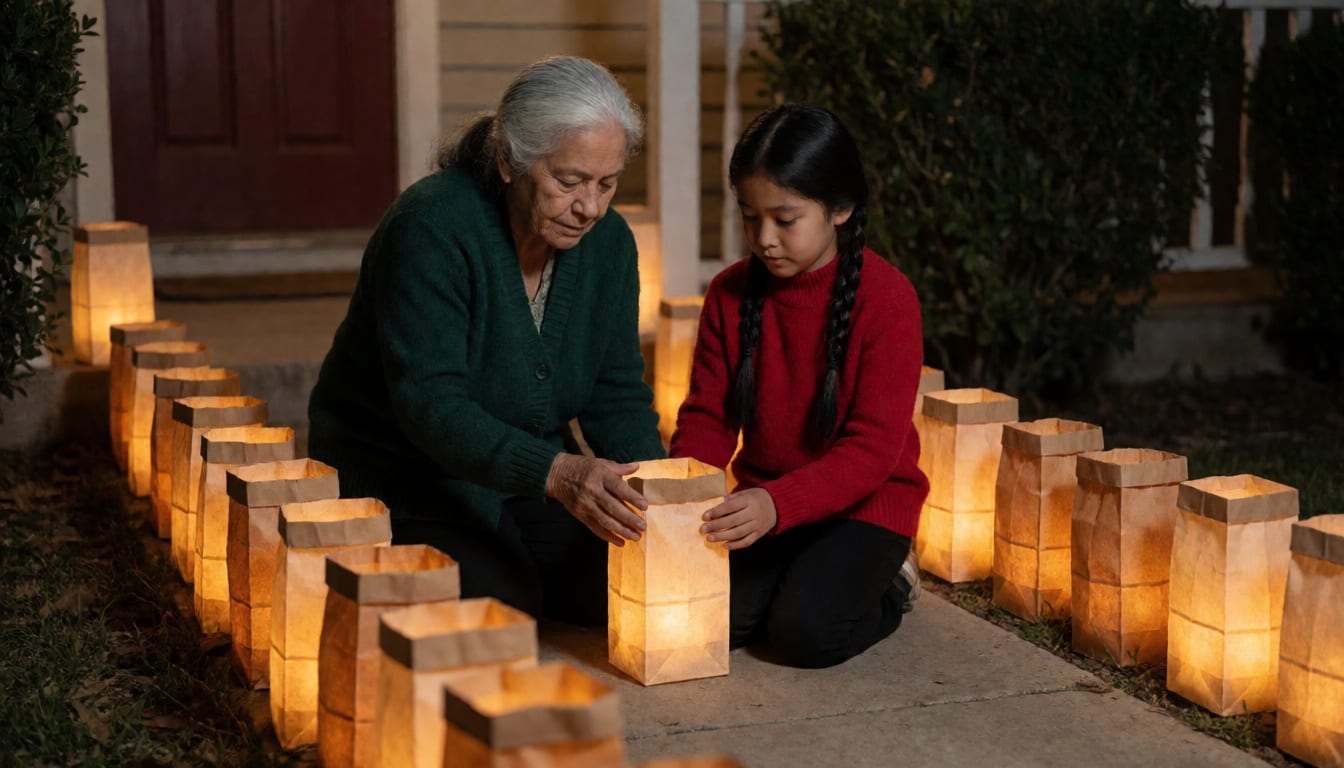
A paper bag, a little sand and a small light may not sound like much of a Christmas decoration. But place a row of those lanterns along a walkway after sunset, and something changes. The light is gentle. The path feels welcoming. And even the busiest part of town can seem peaceful for a moment.
Many San Antonio families know these lights as luminarias. They have appeared along the River Walk, outside churches and in holiday displays across the Southwest. There is a reason they mean more than pretty decorations. Their history is tied to Christmas faith, community hospitality and the idea of lighting a way for someone else.
Here in San Antonio, that older custom became part of a public celebration with its own local history.
What Is a Luminaria?The familiar paper luminaria is a simple lantern. A paper bag stands upright with sand or another weight at the bottom. A small candle or electric light glows inside, and several lanterns placed together outline a path or doorway.
That warm glow is the feature people remember. Instead of lighting a whole building or filling a tree with electric bulbs, luminarias place small points of light near the ground.
The National Park Service explains that the words used for these lights vary across the Southwest. In parts of northern New Mexico, a paper lantern is more often called a farolito, meaning little lantern, while luminaria can refer to a small bonfire. Elsewhere, including much of Texas, people commonly call the paper lanterns luminarias.
Neither usage needs to erase the other. The language reflects different communities and different histories.
Before Paper Bags, There Were FiresThe modern brown paper bag is not where the story began.
According to the National Park Service, earlier communities in New Mexico used small fires of wood and bark along roads and gathering places during the winter holiday season. Historical accounts connect these lights with Spanish colonial customs and with the traditions of Pueblo communities, whose own celebrations have continued and changed over time.
The familiar square-bottom paper bag came later. The National Park Service notes that this style of bag was patented in 1872, making it possible to set a small lantern upright with sand and a candle inside.
That does not give us a single, simple date when every luminaria tradition began. The history stretches across places, communities and centuries. Bonfires, lanterns, religious observances and winter celebrations influenced one another as people carried their customs from home to home.
It is better to remember that larger history than to say the paper-bag luminaria was invented in San Antonio or that one Spanish settler started the entire custom. Neither claim is supported by the evidence.
Why the Lights Matter at ChristmasIn many Mexican and Southwestern Catholic traditions, Christmas luminarias have been understood as lights to guide the Holy Family, Mary and Joseph, on their journey in search of shelter. They also represent a welcome offered to neighbors and visitors.
That symbolism connects naturally to Las Posadas, the Christmas observance that recalls the search for lodging before the birth of Jesus. Posadas celebrations often involve a procession, songs and the act of asking to be received.
For generations of families, those practices have made the Christmas season about more than decorations. They offer a way to teach children about hospitality and the importance of making room for someone in need.
Not everyone who places luminarias outside a home today does so for religious reasons. Some enjoy the beauty of the lights, remember a family custom or simply want to welcome neighbors. The tradition can carry different meanings while retaining its historical roots.
San Antonio Builds Its Own River Walk CelebrationSan Antonio's Fiesta de las Luminarias has its own documented beginning. The official River Walk historical timeline records the first celebration in December 1968.
That matters because it gives us a local date without pretending the custom itself began here. By the late 1960s, San Antonio was adapting an older Southwestern holiday tradition into a community event beside the river.
The same River Walk history says Fiesta de las Luminarias and Las Posadas were presented together in 1971. A later newspaper account, published in 1993, described thousands of lighted paper bags along the River Walk over several December weekends, with a Las Posadas procession taking place during the holiday celebration.
For anyone who remembers those evenings, the lights are tied to a very particular San Antonio setting: the water, the stone walkways, the bridges and the people gathering to celebrate Christmas together.
Archived photographs and earlier reporting show that the River Walk luminarias became a recognizable part of the city's holiday memory. That public tradition gave residents and visitors a chance to encounter a custom with much older roots.
The Paper Lanterns Came Before the Famous Electric LightsThere is another local detail worth knowing. The River Walk's first Fiesta de las Luminarias came before the modern tradition of stringing large numbers of electric Christmas lights through the downtown trees.
That separate electric lighting celebration began in 1975. The Handbook of Texas describes how downtown business leaders, including Joske's president William McCormick, worked to bring holiday lights to the River Walk as part of efforts to attract visitors and support downtown businesses.
The two forms of light tell different parts of San Antonio's Christmas story. Electric lights create the familiar glowing canopy over the river. Paper luminarias mark a path close to the ground, carrying the symbolism of welcome and the older holiday observances.
We can appreciate both without treating them as the same event.
What About Christmas 2026?Visit San Antonio confirms that the River Walk's electric holiday lights are scheduled to shine from November 27, 2026, through January 11, 2027. That is a separate attraction from Fiesta de las Luminarias.
As of November 14, an official 2026 schedule for the traditional Fiesta de las Luminarias has not been independently confirmed for this article. Some outside calendars list different dates, and at least one labels its December dates as estimates.
Families who hope to see a public luminaria display this season should check the official San Antonio River Walk calendar before making a special trip. Do not assume that an earlier year's schedule or a third-party event listing is the final plan for 2026.
That distinction can save a family an unnecessary drive, especially when grandparents or young children are coming along.
Keeping the Tradition at HomeYou do not need a large festival to appreciate the meaning of a luminaria. Families can create a small line of lanterns for a holiday gathering or use them to welcome guests along a porch or walkway.
For a home display, a battery-operated LED candle is a practical choice. It preserves the familiar paper-bag glow without placing an open flame inside a combustible material. Keep the bags away from vehicles, decorations, dry plants and places where someone could trip.
If children help decorate the lanterns, that can also be a chance to tell them why people have placed lights along paths at Christmas. The conversation matters as much as the finished display.
And for families who celebrate Las Posadas, the lights may be part of a deeper religious practice. That tradition deserves to be understood respectfully, not reduced to an attractive holiday craft.
A Small Light, a Lasting WelcomeSan Antonio has many ways of celebrating Christmas. There are boat parades, electric lights, music, gatherings at Market Square and traditions carried through parishes and family homes.
Luminarias belong in that larger picture because they make such a simple gesture. A light by the path says that someone is expected, and someone is welcome.
Our city did not invent the Southwestern custom. But San Antonio made it part of its own Christmas memory, especially through the River Walk celebration that began in 1968.
Maybe that is why these little lanterns still feel so meaningful. In a city with a soul, sometimes the loveliest holiday tradition is the quietest one: leaving a light on for somebody else.
Quick Facts
Sources and Further Reading
|
0 Comments
Join the conversation
Be the first to comment
Share your thoughts above.