

Los Pastores: The Christmas Play San Antonio Families Kept Alive |
Long before Christmas became a season of dazzling light displays, neighbors in San Antonio were telling the story of shepherds, angels and a troublesome devil. Their tradition became part of the city's cultural memory. |
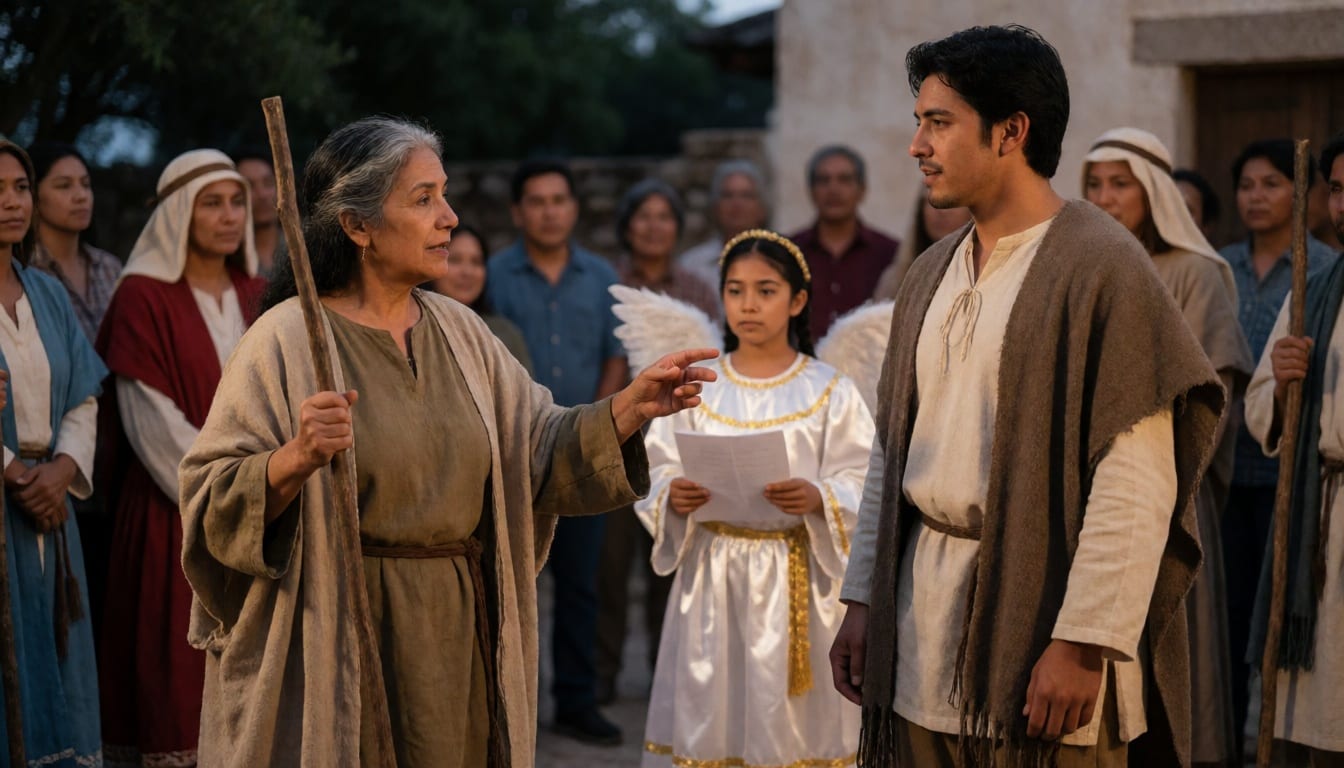
A group of shepherds sets out for Bethlehem. They have a long way to go, and someone is determined to stop them.
That someone is Lucifer, who has plans of his own.
It may sound like an unusual beginning for a Christmas play, but generations of San Antonio families have known this story as Los Pastores, or The Shepherds.
The play brings together religious storytelling, Spanish-language songs, lively characters and moments of humor. It is a tradition that has lived not only in written scripts, but also in the memories of neighbors who learned their parts and returned to perform them year after year.
In a city with deep ties to its historic Missions, that makes Los Pastores much more than a holiday performance.
A Christmas Story Told Through the Shepherds
Many Christmas plays begin with Mary and Joseph arriving in Bethlehem. Los Pastores approaches the Nativity from another direction.
Its principal characters are shepherds traveling to honor the newborn Christ Child.
Along the way, they encounter Lucifer and other devils who try to turn them from their journey. The Archangel Michael eventually overcomes Lucifer, allowing the shepherds to continue.
The story has a clear religious meaning, but the performance can also be spirited and funny.
Different versions introduce characters such as Bartolo, a shepherd whose human weaknesses add humor to the unfolding drama. The songs, costumes, dialogue and scenes give performers opportunities to make familiar characters their own.
That flexibility is important. The Texas State Historical Association explains that folk dramas change as they pass between communities. The same basic story may be presented differently depending on the people performing it.
There is no single version that speaks for every family or town.
From Old-World Theater to South Texas
The roots of Los Pastores reach back to Spanish religious drama and the Christmas plays that developed in Mexico.
Franciscan missionaries and other religious communities helped carry these dramatic traditions across the region. In Texas, the plays became part of Mexican and Mexican American Christmas observances.
The historical record is stronger for some periods than others.
The Texas State Historical Association documents reports of Pastorelas and Posadas in nineteenth-century San Antonio, along with surviving texts and recorded performances from the 1890s.
That history reminds us that Los Pastores was not simply a show introduced for modern holiday visitors. It belonged to neighborhoods and families long before today's tourism calendars.
It was a way of gathering people, teaching a religious story, sharing music and giving members of the community a part in the Christmas season.
A Play Learned From One Generation to the Next
For many years, much of the tradition was passed along by word of mouth.
Performers learned their lines, songs and movements from people who already knew the play. In some neighborhoods, a performance might take place in a home, courtyard or public gathering space rather than a formal theater.
A San Antonio Public Library history article describes performances recorded in the city's newspapers during the 1890s. One 1897 announcement placed a production at a residence near West Houston and Laredo streets.
That detail is worth remembering.
Before the modern stage lights, printed programs and organized holiday festivals, neighbors were making room for the play in the spaces available to them.
The performers were not necessarily professionals. They were members of the community taking part in something that mattered to their families.
The Guadalupe Players and Mission San José
One of San Antonio's best-documented Los Pastores traditions developed around the Guadalupe Players, associated with Our Lady of Guadalupe Church.
The National Park Service records performances by the group at Mission San José beginning in 1947.
For decades, the performance brought the shepherds' journey to a place already closely connected with San Antonio's Spanish-colonial history.
The outdoor presentation combined the play's traditional religious story with the setting of one of the city's historic Missions. Earlier National Park Service announcements describe performances sung in Spanish with English narration.
At those documented presentations, audiences were encouraged to bring chairs and prepare for winter weather.
A 2016 report from the San Antonio Report described families gathering outdoors while performers in colorful costumes brought the shepherds, angels and devils to life.
The setting helped connect two kinds of preservation: the physical preservation of the Missions and the continuation of traditions carried by people.
The Missions' walls matter. So do the songs and stories remembered by the families who have lived around them.
Why Keeping a Folk Play Alive Takes Work
A historic building can be repaired with stone, wood and careful craftsmanship.
A performance tradition needs something different.
It needs people willing to learn the songs, remember the dialogue, prepare the costumes and teach the next group of performers.
Those responsibilities are not small.
As families move, communities change and longtime participants grow older, traditions can lose the people who know how to carry them forward.
The Texas State Historical Association notes that urbanization, changing community patterns and the departure of younger participants have challenged folk-drama traditions in Texas.
Yet those traditions have also inspired preservation and revival efforts.
The Guadalupe Players' long history offers a practical example of how a community can keep a performance alive. People return to the story, share what they know and invite others to take part.
Not every role requires a grand costume or an elaborate stage. Much of the work happens in rehearsals and preparation, long before an audience gathers.
The Faces Behind the Masks
Los Pastores is remembered partly for its striking characters.
The devils and angels offer a strong visual contrast. Traditional performances may use masks, decorated clothing, staffs and other theatrical props to distinguish the forces encountered by the shepherds.
But those objects are more than decoration. They help performers tell the story, particularly when audiences already recognize the characters and the meaning behind their actions.
The materials and designs have varied across places and generations.
That is an important distinction when looking at old photographs. A horned mask from one performance should not automatically be presented as the design used by every San Antonio group.
The surviving photographs, scripts and recollections give researchers a starting point for understanding the craft.
They also leave a worthwhile question for the future: who is making and maintaining these costumes today, and how are those skills being taught?
That would be a valuable story of its own, once the practicing artisans can be identified and their work documented.
A San Antonio Christmas Beyond the Decorations
San Antonio has many beloved Christmas traditions, from family meals and neighborhood celebrations to the lights along the River Walk.
Los Pastores reminds us that some of the city's most meaningful holiday customs are not built around buying something or visiting a new attraction.
They are built around participation.
The play belongs to a larger tradition of Mexican and Mexican American religious storytelling in Texas. It also differs from Las Posadas, which centers on Mary and Joseph's search for lodging.
Both observances have played important roles in the region's Christmas history, but they tell different parts of the Nativity story.
For San Antonio families, learning about these customs offers another way to understand the city's heritage.
The people who carried these traditions helped shape the community we know today.
The Story Is Still Worth Telling
In Los Pastores, the shepherds face distractions, obstacles and a troublesome devil. They continue because they know where they are trying to go.
There is something fitting about that story being carried from one generation to another.
Keeping a tradition alive also means finding a way forward. It takes patience, effort and people who care enough to return.
The history of Los Pastores belongs to the families, churches, performers and neighbors who made that effort over many years.
When we remember their work, we remember something important about San Antonio itself.
A city's heritage does not live only in its buildings. It lives in the people who continue to tell its stories.
Quick Facts: Los Pastores in San AntonioWhat: Los Pastores, a traditional Nativity folk drama about shepherds traveling to Bethlehem Language: Historically performed in Spanish; documented San Antonio productions have included English narration Historical setting: San Antonio neighborhoods, churches and community gathering places Notable performance location: Mission San José, 6701 San José Drive, San Antonio, Texas Documented performers: Guadalupe Players, associated with Our Lady of Guadalupe Church Mission San José tradition: National Park Service records date the group's performances there to 1947 2026 performance schedule: Not independently confirmed as of November 15, 2026 Visitor information: Check current announcements from San Antonio Missions National Historical Park and the relevant parish or organizer before planning attendance
Sources and Further Reading
|
0 Comments
Join the conversation
Be the first to comment
Share your thoughts above.