

Christmas Buñuelos: The Sweet Tradition San Antonio Families Pass Down |
From West Side convent kitchens to family-owned bakeries and Christmas gatherings, these golden, cinnamon-sugar pastries carry generations of San Antonio memories. |
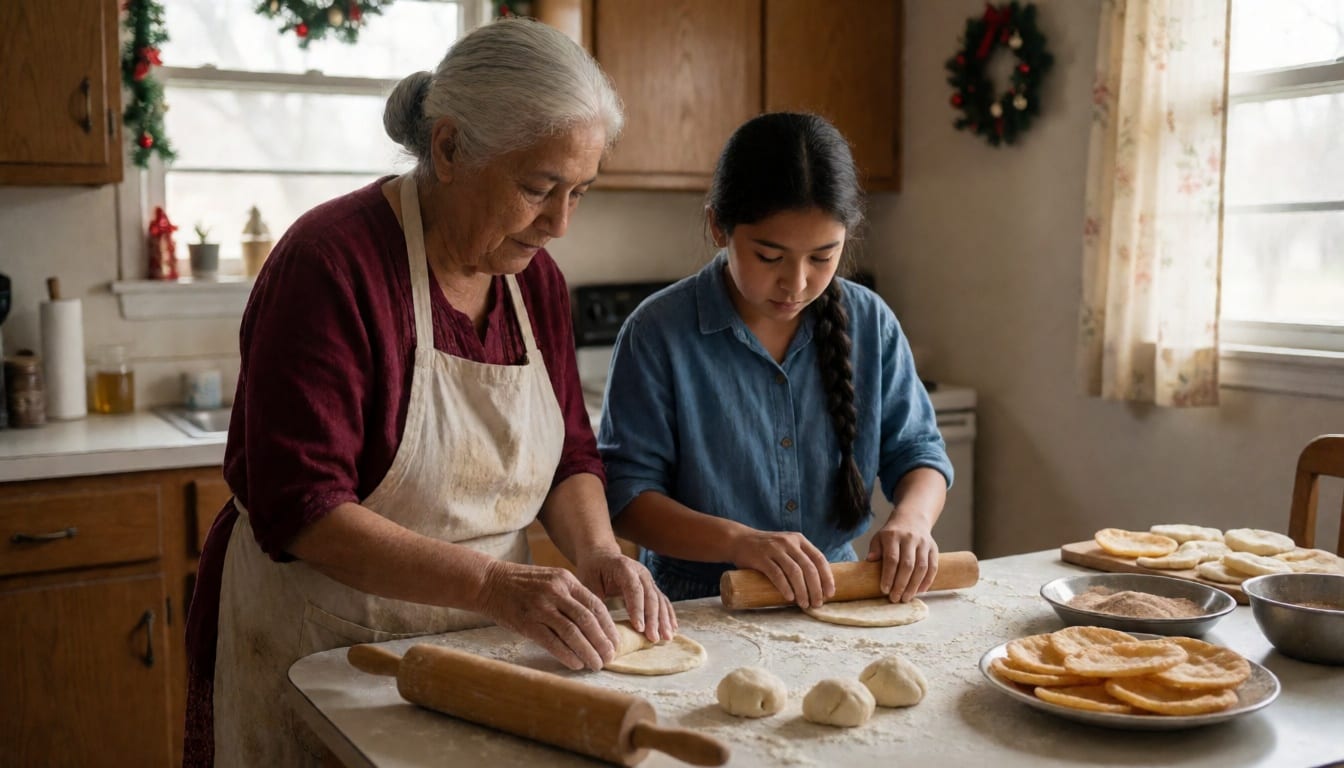
There is something especially inviting about the smell of cinnamon and sugar during Christmas in San Antonio.
The tamales may be steaming, the family may be gathering, and someone may already be preparing a pot of Mexican hot chocolate. But when a plate of freshly made buñuelos arrives at the table, there is always room for something sweet.
Thin, golden and wonderfully crisp, a buñuelo is one of those simple foods that carries an extraordinary amount of meaning.
It is a reminder of the people who taught us to cook, the neighbors who shared their holiday treats and the traditions that make our city feel like home.
And here in San Antonio, the story of the buñuelo extends well beyond the family kitchen.
A Christmas tradition with deep roots
Buñuelos are enjoyed throughout many Spanish-speaking countries, although their ingredients, shapes and textures vary considerably.
In parts of Latin America, they are small, round fritters. In Mexico and South Texas, two familiar versions are the thin, round pastries made from stretched flour dough and the delicate flower-shaped pastries made with a special metal mold.
Both have a place in our holiday traditions.
Texas food historian and chef Adán Medrano traces the pastry's culinary ancestry through Spain and its historic Arabic influences. Over generations, the tradition developed into distinctly regional expressions of Mexican and Texas Mexican cooking.
Here, cinnamon and sugar give many buñuelos their familiar holiday flavor.
Some families prepare them for Christmas Eve or Christmas Day. Others make them for New Year's Eve, when enjoying a buñuelo is traditionally associated with hopes for good fortune in the coming year.
Whatever the occasion, the joy of making and sharing them is something that can bring the whole family together.
The Christmas table at Mi Tierra
Few San Antonio families are more closely associated with our city's Mexican food heritage than the Cortez family, whose Mi Tierra restaurant has become a landmark at Historic Market Square.
In a Christmas feature published by PBS Food, television chef Lidia Bastianich joined the family for their holiday celebrations.
Alongside the family's other festive dishes, she learned about preparing buñuelos.
The children were particularly enthusiastic about the finished pastries, a delightful reminder that some holiday traditions do not need much encouragement to reach the next generation.
For San Antonio families, this is part of the beauty of our Christmas food traditions. They can feel equally at home in a restaurant kitchen, around a grandmother's dining table or at a gathering where several generations contribute to the meal.
Food becomes a language of hospitality.
The West Side sisters who made Christmas sweeter
One of San Antonio's most meaningful buñuelo traditions belongs to the Sisters of Perpetual Adoration.
The religious community has had a presence on the West Side since 1927.
In December 2024, the San Antonio Express-News documented the sisters' remarkable holiday pastry operation, which had already been part of their ministry for more than half a century.
The sisters and their volunteers prepared thousands of delicate buñuelos each Christmas season.
Their specialty was the flower-shaped variety, created with a heated metal mold dipped into batter and then fried.
For the sisters, the work represented gratitude toward the neighborhood that had supported their ministry through the years.
These were not simply desserts. They were expressions of a relationship between the convent and the community surrounding it.
That is a particularly beautiful example of the Christmas spirit. A modest kitchen tradition became something generations of West Side families looked forward to.
The sisters' 2026 ordering arrangements have not been confirmed, so their historical tradition should not be treated as an announcement of current holiday sales.
Two local families, one sweet legacy
The Buñuelo Factory offers another example of how San Antonio's food traditions can survive from one generation to the next.
According to its official business history, Paul Campos established the company in 1993. His family spent decades making the crispy pastries that became part of local celebrations.
When the Campos family decided to retire, another San Antonio family stepped forward to continue the business.
In 2025, the Pineda family, also associated with Papi's Barbacoa and La Luz Tortilla Factory, took over the Buñuelo Factory.
That transition matters.
A family business can hold more than recipes and equipment. It can hold the memories of customers who have returned year after year, often bringing their children along to continue a familiar holiday ritual.
The Buñuelo Factory's continuation is a reminder of how supporting local businesses helps preserve the traditions that distinguish San Antonio from other cities.
If making buñuelos from scratch is not practical this Christmas, purchasing some from a local maker is another wonderful way to participate.
Check the company's official website before visiting or ordering, particularly during the busy holiday season.
Two kinds of buñuelos worth knowing
Although both are fried and commonly finished with cinnamon sugar, the two familiar Mexican-style buñuelos are prepared differently.
Buñuelos de rodilla: These are thin rounds made from flour dough. Their name refers to the traditional technique of stretching the dough over a cloth-covered knee. A rolling pin and careful hand-stretching provide an alternative for home cooks.
Buñuelos de viento: These delicate pastries are made by dipping a specially shaped metal mold into batter and frying it. They often resemble flowers, stars or other decorative shapes.
The recipe below is for the thin, round variety. No special frying mold is required.
Make Christmas buñuelos at home
The secret to a good round buñuelo is not an elaborate ingredient list. It is taking enough time to work the dough, allow it to rest and roll it sufficiently thin.
This is a half-batch adaptation of chef Adán Medrano's published Texas Mexican recipe.
It makes a manageable family-sized batch and gives you a chance to practice the stretching technique without committing to an entire afternoon of cooking.
Traditional Cinnamon-Sugar Christmas BuñuelosYield: Approximately nine medium buñuelos. Preparation time: 25–35 minutes. Dough resting time: 20–30 minutes. Frying time: Approximately 20–25 minutes. Total time: Allow about 65–90 minutes. Oil temperature: 350°F.
IngredientsFor the dough
For frying and finishing
Preparation
Tips for light, crispy buñuelosIf the dough keeps shrinking: Cover it and give it another five to ten minutes of rest before rolling. If the pastry is thick and chewy: Roll the next portion thinner. An evenly stretched dough is more likely to produce a light, crisp result. If the pastry browns too quickly: Reduce the heat and check the oil temperature before continuing. If the dough tears: Gently pinch the tear closed or make that portion slightly smaller. Homemade buñuelos do not have to be perfectly round. For extra flavor: Serve them with a little piloncillo syrup on the side. The syrup adds a traditional flavor but will soften the crisp pastry if poured over it too early.
A word about frying safelyBuñuelos are a wonderful family activity, but hot oil requires an attentive adult.
Children can help measure the ingredients, mix the cinnamon sugar and roll the dough away from the stove. Keep them clear of the frying station.
Make sure utensils and dough surfaces are free of excess water before bringing them near the hot oil. Never leave the skillet unattended, and do not add water to an oil fire.
Enjoy them with something warm
Buñuelos are particularly satisfying alongside a mug of Mexican hot chocolate or champurrado, the traditional chocolate drink thickened with masa.
The contrast between a crisp, delicate pastry and a warm, rich drink makes a lovely ending to a Christmas meal.
If you are sharing a plate with relatives or neighbors, let the buñuelos cool completely before packing them into a rigid, airtight container. They are fragile, so avoid stacking heavy objects on top.
Enjoy them as fresh as possible, and keep any syrup separate until serving.
The recipe contains wheat. Check the labels of shortening, frying oil and other packaged ingredients if preparing them for someone with food allergies.
Make room for one more family tradition
There is no single way to celebrate Christmas in San Antonio.
Some families make their tamales together. Some visit Market Square, attend Mass or gather to sing Christmas songs. Others carry traditions that came here from different parts of Texas, Mexico and the world.
What makes our city special is the way those traditions become part of a shared community.
In our San Antonio familia, sharing something homemade is one more way to make room for one another.
This Christmas, consider making buñuelos with someone you love. Ask an older relative how they remember them being prepared. Let the younger members of the family try rolling their first piece of dough.
Or visit a local business that is helping keep the tradition alive.
Even if the first buñuelo comes out a little crooked, the time spent together is what matters.
And when the cinnamon sugar begins to disappear from the plate, you may discover that you have started something your family will want to do again next Christmas.
¡Feliz Navidad!
Quick FactsTraditional pastry: Thin, fried flour-dough rounds coated with cinnamon sugar. Related variety: Buñuelos de viento, made using a decorative metal mold. Holiday occasions: Christmas and New Year's celebrations. Recipe yield: Approximately nine medium pastries. Frying temperature: 350°F. Local business heritage: The Buñuelo Factory, established in 1993 and continued by the Pineda family since 2025.
Holiday Information Note: Historical and business information was reviewed November 25, 2026. Specific Christmas 2026 ordering arrangements, prices and availability should be confirmed directly with local makers.
Sources and Further ReadingPBS Food | A Mexican-American Christmas Day San Antonio Express-News | During Holidays, Sisters' Community Service Gets Sweeter The Buñuelo Factory | Our Story Texas Highways | Ring In the Holidays With Tried-and-True Tejano Traditions San Antonio Express-News | How to Make Buñuelos, a San Antonio Holiday Tradition |
0 Comments
Join the conversation
Be the first to comment
Share your thoughts above.