

The Warm Christmas Drink That Brings Chocolate and Masa Together in San Antonio |
Champurrado is more than ordinary hot chocolate. Here’s why some San Antonio families share it during the Christmas season, what makes it thick and comforting, and how a traditional molinillo helps bring it together. |
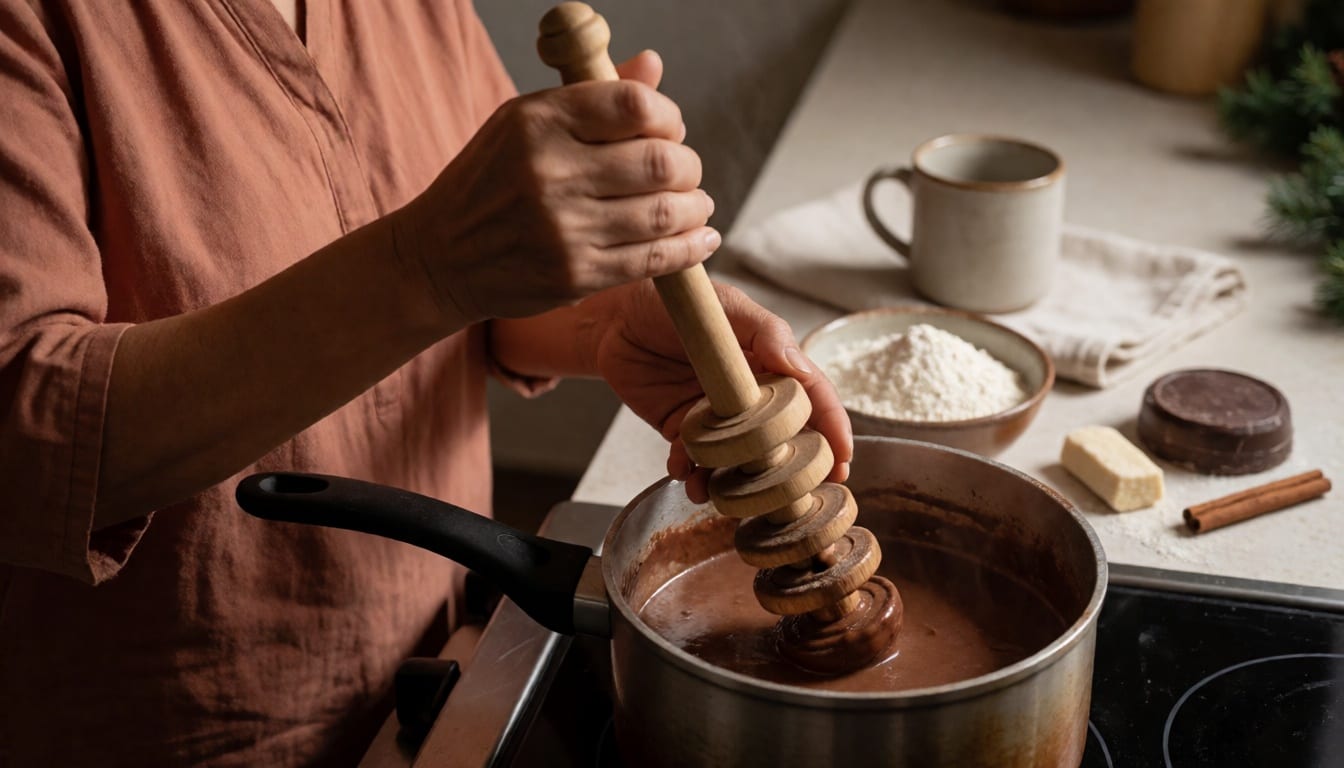
In San Antonio, the Christmas season often brings familiar foods back to the table. There may be tamales in the kitchen, buñuelos waiting on a plate and something warm being stirred on the stove.
For some families, that warm drink is champurrado.
It looks a little like hot chocolate, but one sip reveals something different. Champurrado is thicker, with a smooth texture that comes from corn masa. Chocolate gives it flavor, while ingredients such as cinnamon and piloncillo can add warmth and sweetness.
It is a drink with roots in Mexican food traditions, and it has a documented place in San Antonio's Christmas season, particularly around Las Posadas.
Not every San Antonio household makes champurrado. Some prefer coffee, atole, regular hot chocolate or a completely different holiday drink.
But learning what makes champurrado special is one more way to appreciate the food traditions that families bring to our city.
What makes champurrado different from hot chocolate?The biggest difference is the masa.
Champurrado is a chocolate-flavored version of atole, a family of warm drinks associated with Mexico and Central America. Atole is commonly made with corn-based ingredients that thicken as they cook.
When chocolate is added, the result can be champurrado.
Masa is dough made from specially treated corn. Masa harina is the dried flour used to make that dough. In a pot of champurrado, the corn ingredient gradually gives the liquid a fuller texture.
That is why a good cup can feel more substantial than hot chocolate made simply by mixing cocoa with milk.
Baker Arturo Enciso's champurrado recipe, published by King Arthur Baking, uses masa harina, Mexican-style stone-ground chocolate, piloncillo and optional canela, or Ceylon cinnamon.
The recipe also offers a choice between water and a combination of water and milk.
Those details are useful because they show that even a carefully documented recipe allows some variation.
The chocolate brings its own sweetness and flavor. Piloncillo, an unrefined cane sugar, can add a deeper sweetness. Cinnamon contributes its familiar aroma.
And the masa is what makes the drink unmistakably different.
Where champurrado fits into a San Antonio ChristmasOne of the clearest local connections appears in reporting on Las Posadas.
Las Posadas traditionally takes place from December 16 through Christmas Eve. The observances recall Mary and Joseph seeking lodging before the birth of Jesus.
Depending on the community, celebrations may include prayer, singing, processions and food shared afterward.
The San Antonio Report has documented neighborhood Posadas on the city's West Side, including gatherings where families and community members carry forward the tradition.
Its coverage identifies champurrado, made with masa and cinnamon among other ingredients, as a drink traditionally served at Posadas.
The Texas Historical Commission also describes Posadas gatherings in Texas where neighbors share hot drinks, tamales and buñuelos after the procession.
These reports establish a genuine local and regional connection. They do not mean every Posada serves champurrado, or that every family who drinks it participates in the religious observance.
For some households, champurrado may belong to a Christmas gathering. For others, it may be a breakfast drink, an afternoon treat or something to enjoy whenever the weather turns cool.
That variety is part of the tradition's living character.
The molinillo: A wooden whisk with a purposeIf you've seen someone prepare Mexican-style hot chocolate, you may have noticed a wooden tool with a carved handle and rings near one end.
That is a molinillo.
It is a traditional whisk used to stir and froth chocolate drinks. The Smithsonian's National Museum of American History preserves examples and explains the tool's history.
The Texas Historical Commission describes the familiar technique: the handle is held between the palms and turned by rubbing the hands back and forth.
The moving wooden head helps mix the hot chocolate and create foam.
For a family that grew up using a molinillo, the tool may be as familiar as a favorite cooking spoon.
But it is worth making a distinction.
The molinillo helps stir and froth the drink. The masa is what provides champurrado's characteristic thickness.
A modern whisk can also be used to prepare champurrado. In King Arthur Baking's published recipe, the cook whisks masa harina into the liquid and continues stirring as it thickens.
So the traditional tool is meaningful, but it is not the only possible way to make the drink.
Why the masa mattersChampurrado depends on more than melting chocolate in a pot.
The masa ingredient needs time and careful mixing to become smooth.
In Enciso's published recipe, the cook heats water or a water-and-milk mixture with sweetener and optional cinnamon, then melts the chocolate into the liquid.
Masa harina is whisked in gradually while the heat is lowered. Continued gentle heating and stirring help the drink thicken without becoming lumpy.
That gradual process is the important part for someone who has never made champurrado before.
Adding the thickener carelessly can leave dry clumps. Heating too aggressively can make it harder to keep the mixture smooth.
King Arthur Baking's recipe includes specific measurements, instructions and ingredient-substitution notes. It also explains why ordinary cornmeal and untreated corn flour are not equivalent to masa harina.
For anyone planning to try the drink at home, that documented recipe is a more reliable starting point than an untested version created for this article.
As with other hot drinks, take care around the stove and serve it at a comfortable drinking temperature, especially when children are present.
Chocolate, corn and a much older food storyPart of what makes champurrado interesting is the combination of two important ingredients in the history of Mexican food: corn and chocolate.
Both have deep roots in Mesoamerican foodways, long before modern Christmas celebrations took their present form.
But it would be misleading to say that the particular champurrado recipe served by a family today has remained unchanged for centuries.
Ingredients, sweeteners, cooking tools and personal preferences have changed over time.
The molinillo itself has a history that deserves attention. The Smithsonian describes it as a traditional chocolate whisk developed in colonial Mexico.
That means we should not present every part of the modern preparation as a single unbroken ancient recipe.
The better story is that ingredients with long histories have been combined and adapted by generations of cooks.
For San Antonio readers interested in exploring historical Mexican cooking more deeply, UT San Antonio offers a remarkable resource.
Its Mexican Cookbook Collection contains thousands of cookbooks, including publications and manuscripts dating back to the eighteenth century.
The university has also digitized selected materials so people can explore how Mexican recipes were recorded and shared at different times.
The collection is not proof of one universal San Antonio champurrado recipe. It is a place to learn how varied and well-documented Mexican culinary traditions can be.
Champurrado beyond the family kitchenChampurrado isn't only something people prepare at home.
San Antonio food reporting has documented the drink at local food businesses, often alongside buñuelos and other familiar Mexican treats.
A December 2021 San Antonio Current feature highlighted places selling champurrado and seasonal sweets.
More recent San Antonio Report coverage also described a family-operated drink stand serving champurrado and other Mexican hot beverages during a seasonal gathering at the Pearl.
These examples show the drink has a place in the city's public food culture as well as its household traditions.
They are not a guarantee that those vendors, menus or seasonal setups will be available during Christmas 2026.
If you're hoping to buy a cup rather than prepare one, check directly with the business before traveling. Ask whether the drink is being served that day and whether it is made with water, milk or other ingredients relevant to your household.
That simple question can save a wasted trip and help you discover how different cooks prepare the drink.
How to explore champurrado at homeIf you've grown up with a family recipe, that is a good place to begin. A relative may have particular measurements, a favorite chocolate or a familiar way of stirring the pot.
If you're learning about champurrado for the first time, a few practical details will help.
Know the difference between masa and cornmeal. Use the type of corn ingredient specified by your recipe. King Arthur Baking's version uses masa harina.
Read the chocolate label. Different chocolate disks contain different amounts of sugar. The recipe's sweetness may need adjusting.
Don't rush the thickening. Gradual whisking and gentle heat help the drink reach a smooth consistency.
Choose a preparation that suits your household. A documented version can use water or water with milk. Verify ingredients if someone has a dairy allergy or another dietary restriction.
Keep the story connected to the people. If a family member makes champurrado, ask when they learned the recipe and which occasions they associate with it. Those answers may be more meaningful than finding a single supposedly perfect version.
And if you're looking for complete measurements and cooking instructions, follow the linked published recipe. This article explains the food tradition; it has not been kitchen-tested as a new recipe.
Something warm to shareThere is something welcoming about offering someone a warm cup to drink.
In San Antonio, where families carry many different Christmas traditions, champurrado is one example of how food can bring generations together.
Some people remember the sound of a molinillo turning in the pot. Others remember the texture, the chocolate or the food served alongside it.
And some neighbors are only now discovering what champurrado is.
There's room for all those experiences.
The next time you hear someone mention champurrado during the Christmas season, you'll know that its richness comes from more than chocolate.
It also comes from the corn, the careful stirring and the traditions people choose to share.
Quick FactsDrink: Champurrado Category: Warm chocolate-flavored atole Characteristic thickener: Corn masa or masa harina Other ingredients in a documented recipe: Mexican-style chocolate, piloncillo and optional cinnamon Liquid: Water or a water-and-milk mixture, depending on the recipe Traditional tool: Molinillo, a wooden chocolate whisk San Antonio connection: Documented in local Posadas reporting and seasonal food coverage Christmas observance: Las Posadas traditionally takes place December 16–24 Home-preparation resource: King Arthur Baking's champurrado recipe by Arturo Enciso Research resource: UT San Antonio's Mexican Cookbook Collection Important distinction: Not all San Antonio families serve champurrado, and recipes vary
Sources and Further InformationSan Antonio Report: How San Antonians Celebrate Las Posadas King Arthur Baking: Champurrado Recipe by Arturo Enciso King Arthur Baking: How to Make Champurrado Smithsonian National Museum of American History: Large Molinillo Texas Historical Commission: Molinillos and Texas Holiday Traditions UT San Antonio Libraries: Mexican Cookbook Collection UT San Antonio: La Cocina Histórica San Antonio Current: San Antonio Buñuelos and Champurrado Coverage, 2021 San Antonio Report: Local Families Serving Hot Drinks at the Pearl
Research Note: Published local reporting, museum records, university resources and a documented recipe were reviewed November 23, 2026. The local examples describe particular people, observances and business offerings, not every San Antonio household. Historical vendor coverage does not verify Christmas 2026 availability. No original interviews, cooking tests, vendor visits or firsthand observations were conducted for this article. |
0 Comments
Join the conversation
Be the first to comment
Share your thoughts above.